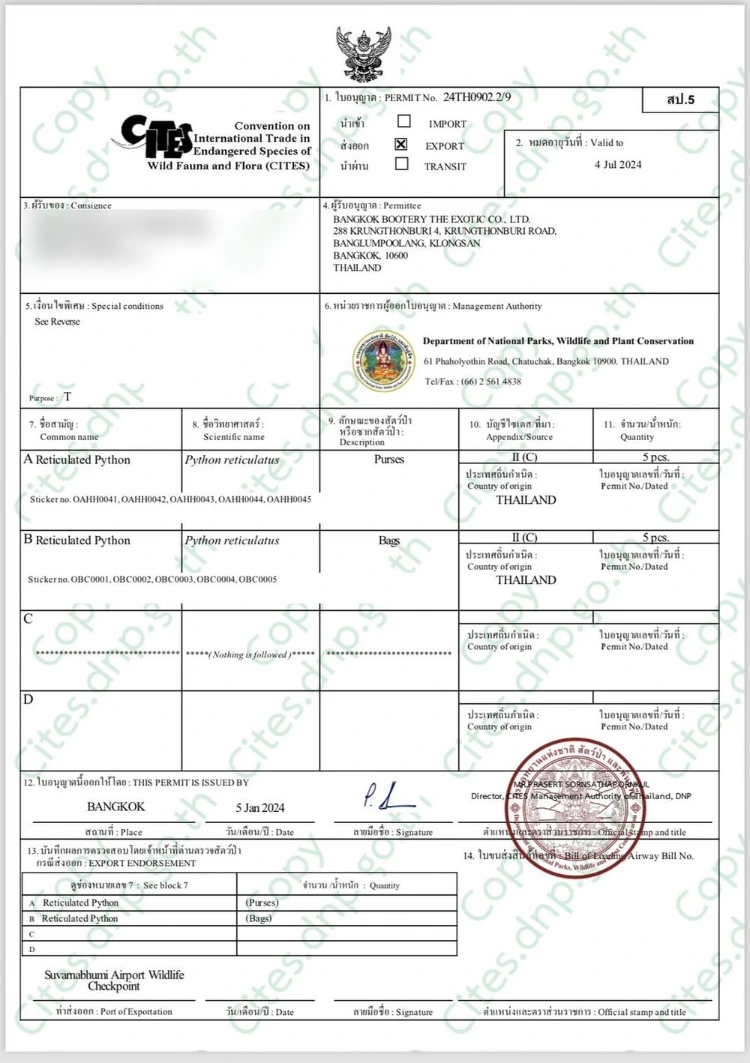
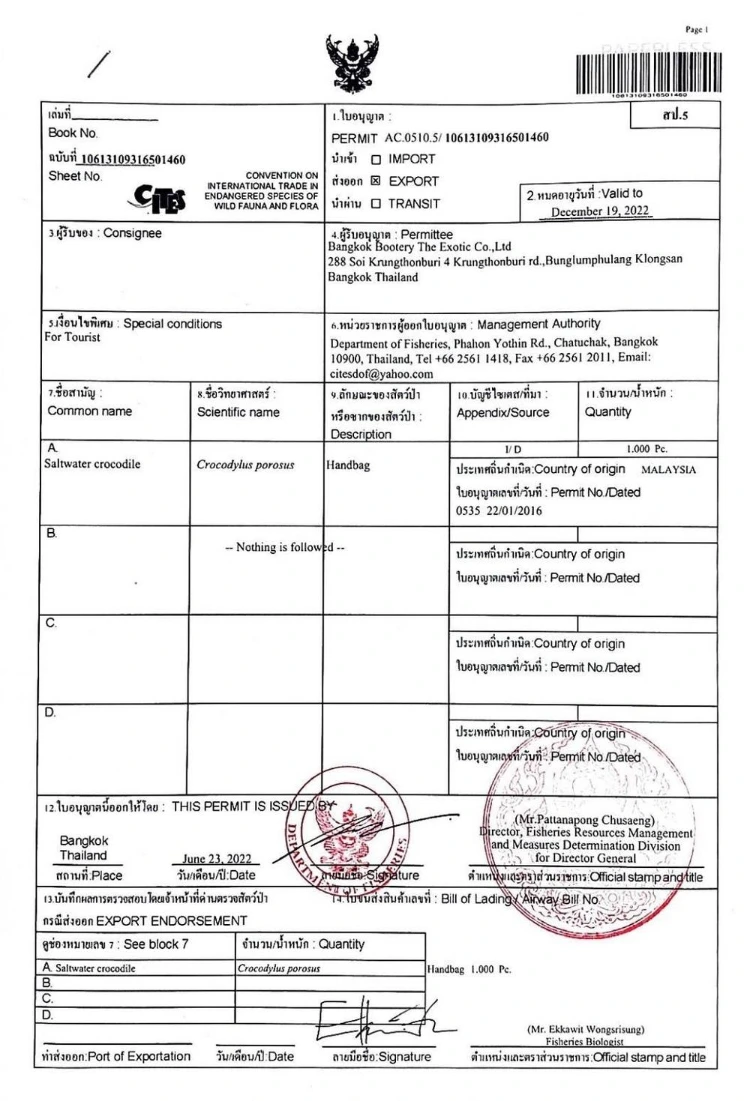
What Is a CITES Certificate
CITES stands for the Convention on International Trade in Endangered Species, an international agreement between governments. It ensures that international trade in wild animals such as crocodile or python does not threaten their survival.
A CITES certificate is essential for the successful delivery of exotic skin goods. Without it, crocodile and python skin goods will be held at customs, or imported/exported goods will be returned to the sender.
If you trade animal species or skins listed in the CITES appendices, or products made from them such as exotic skin handbags, wallets, purses, shoes and belts, you must present the original valid CITES certificate or re-export certificate, issued by the CITES management authority of the country of origin, at the time of export/import.
Bangkok Bootery provides the CITES certificate on the date of purchase. We prepare all the documents; buyers only need to give us their name, last name and passport number.
Documents required to apply for a CITES certificate
- The application form, clearly showing the purchaser's details (name, surname, address), the vendor's details, a detailed description of the goods, the provenance of the skin, the scientific and common name of the species, and the appendix the species is listed in.
- The tannery's declaration of the quantity of skins sold to the manufacturer.
- The manufacturer's declaration of the number of skins used in the product.
- Receipt of payment of government tax.
The 14 information boxes on the certificate
- Permit Number: document number and reason for issue, which is "Export".
- Date: the valid-until date. The document must be applied for before this date.
- Consignee: full name, address and passport number of the customer.
- Permittee: name, address and contact information of the issuing company, Bangkok Bootery.
- Purpose: for tourist.
- Management Authority: Thai Department of Fisheries, with contact details.
- Common name of skin: for example, freshwater crocodile.
- Scientific name of skin: for example, Crocodylus siamensis.
- Description: category of the purchased goods, for example shoes.
- Source: country of origin of the skin, for example Thailand.
- Quantity: number of goods covered by the document, for example 1 pair or 1 piece.
- Permit issued by: signed and stamped by a Thai management authority officer.
- Export endorsement: type of skin, quantity, category and number of goods covered.
- Bill of lading: signed and stamped by a Thai management authority officer.
The CITES procedure must be carried out regardless of the amount of skin used or the number of items purchased, even when crocodile or python skin is used only in the lining of a handbag. The CITES licence costs the same for one item as for several.